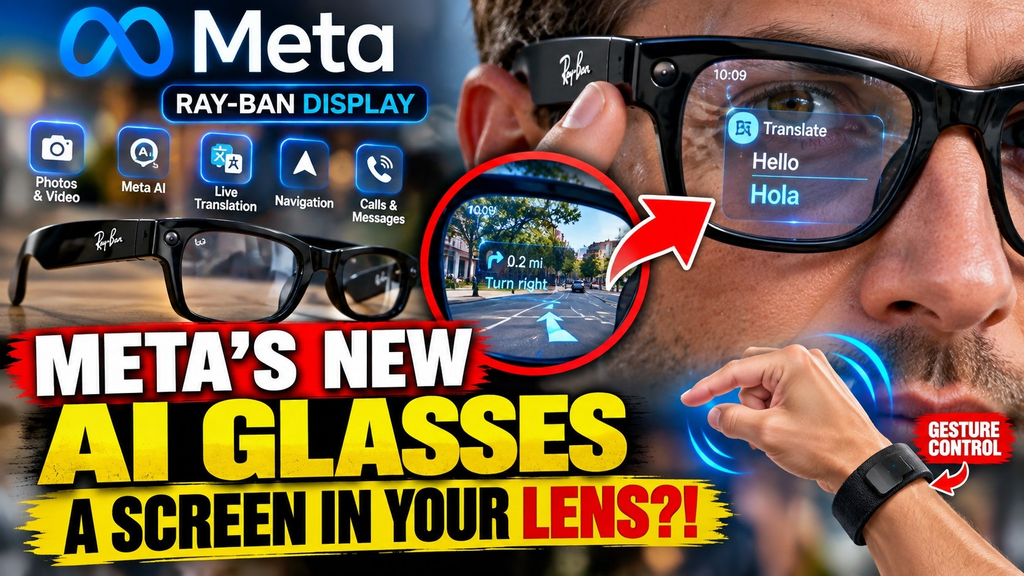
Meta is pushing its AI glasses beyond simple cameras and voice assistants with a new generation of wearable technology that puts a full-color display directly into the lens.
Called Meta Ray-Ban Display, the glasses combine a built-in visual display with Meta AI, cameras, speakers and a new Meta Neural Band that lets users control certain functions with hand gestures.
The technology is attracting attention online because it looks much closer to the futuristic smart glasses many people have imagined for years.
WHAT ARE META RAY-BAN DISPLAY GLASSES?
Meta Ray-Ban Display glasses are a new type of AI-powered wearable developed by Meta in partnership with Ray-Ban.
Unlike earlier Meta smart glasses that primarily relied on cameras, audio and voice interaction, the Display model includes a full-color display integrated into the right lens.
Ray-Ban says the display has a resolution of 600 × 600 pixels.
This means information can appear directly in front of the wearer instead of requiring them to look down at a smartphone.
WHAT CAN THE DISPLAY SHOW?
The display is designed to provide information while the wearer remains focused on the world around them.
Depending on the feature and availability, users can interact with information, view camera previews, access navigation-related information and see other visual content through the glasses.
Meta also says live translations can appear directly in the in-lens display, allowing users to see translated captions while continuing a conversation.
The feature is intended to make the interaction feel more natural because users don’t necessarily have to pull out their phones to see information.
A NEW WAY TO CONTROL THE GLASSES
One of the most unusual parts of the system is the Meta Neural Band.
The wrist-worn device uses electromyography technology to detect signals associated with muscle activity.
Users can make certain subtle hand gestures to control functions on the glasses.
According to Ray-Ban’s official information, gestures can be used for actions such as navigating the display, adjusting volume, activating Meta AI and controlling certain visual features.
That creates a new interaction method that doesn’t depend entirely on touching a phone or speaking commands.
META AI IS BUILT IN
The glasses are also designed to work with Meta AI.
Users can activate Meta AI using voice commands or the glasses’ controls.
Meta says users can ask questions, get information, capture photos and videos, make calls, send messages and control media.
The glasses can also use their camera and AI capabilities to answer questions about things the wearer is looking at.
CAMERA AND VIDEO FEATURES
Meta Ray-Ban Display glasses include a 12-megapixel ultra-wide camera.
The camera can be used to capture photographs and video from the wearer’s point of view.
The glasses also include a capture indicator designed to let people nearby know when the camera is being used.
Captured media can be imported to the Meta AI mobile app before being viewed or shared.
This keeps the glasses connected to the user’s existing phone-based workflow.
LIVE TRANSLATION
One of the more practical applications is translation.
Meta says its AI glasses can support live translation, with translated speech played through the glasses’ open-ear speakers.
With Ray-Ban Meta Display glasses, translated information can also appear directly on the in-lens display.
That could make conversations between people speaking different languages easier without requiring one person to constantly look at a phone.
Meta notes that translation is designed for real-time understanding and may not always produce perfect wording.
A GLIMPSE OF THE POST-SMARTPHONE FUTURE?
The technology reflects a larger push by Meta and other technology companies toward wearable computing.
Instead of constantly looking down at a smartphone, users could potentially receive information through glasses while continuing to interact with their surroundings.
Meta is also opening tools for developers to build experiences specifically for its AI glasses.
The company says developers can create web apps and mobile experiences that work with its AI-glasses platform.
PRIVACY REMAINS AN IMPORTANT ISSUE
AI glasses also raise privacy questions because they contain cameras and microphones that can capture information in public.
Meta has built indicators and controls into its glasses to communicate when recording is taking place.
But privacy remains an important issue surrounding camera-equipped wearable technology.
Reuters reported this month that smart glasses from Meta and other companies are facing increasing scrutiny over privacy and concerns about recording and the handling of captured information.
That means the technology’s success will depend not only on what the glasses can do, but also on whether people feel comfortable around them.
HOW ARE THESE DIFFERENT FROM EARLIER META GLASSES?
Earlier Ray-Ban Meta glasses already offered features such as cameras, open-ear audio and Meta AI.
The major difference with the Display model is the addition of a visual display inside the lens.
That changes the experience from an audio-first AI wearable into something that can also present visual information directly to the wearer.
The Meta Neural Band adds another layer by allowing gesture-based interaction.
WHAT THE NEW GLASSES CAN DO
According to Meta and Ray-Ban, the system supports features including:
• Full-color in-lens display
• Meta AI
• Photo and video capture
• Voice commands
• Calls and messaging
• Music and audio
• Live translation
• Visual information
• Camera preview
• Gesture controls through Meta Neural Band
• Certain navigation features
Availability of individual features can vary by country, device and software version.
THE BOTTOM LINE
Meta’s new Ray-Ban Display glasses represent a significant step beyond traditional smart glasses.
Instead of simply listening to an AI assistant or recording video, users can now interact with visual information directly through the lens.
The combination of a full-color display, Meta AI, cameras, open-ear audio and the Neural Band creates a wearable experience that looks increasingly similar to the futuristic smart glasses imagined in science fiction.
At the same time, privacy, battery life, availability and everyday usefulness will remain important questions as wearable AI becomes more common.
For now, one thing is clear: Meta is betting that the next generation of personal computing may not require users to constantly look down at a phone.